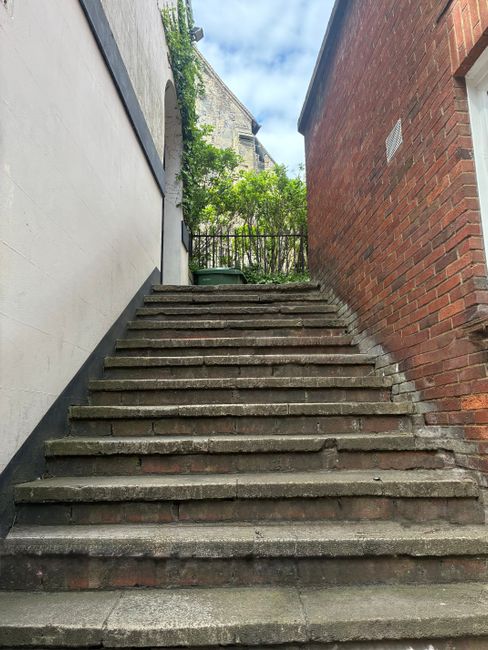
Narrow staircase removals Highbury access solutions
If you have ever stood at the bottom of a tight terraced-house staircase and wondered how on earth a sofa, wardrobe, or bed frame is going to make it out, you are not alone. Narrow staircase removals Highbury access solutions are all about solving that exact problem with the right planning, the right lifting method, and a calm, careful approach. In Highbury, where period homes, split-level flats, and awkward landings are common, a standard moving day can become a bit of a puzzle. The good news? It is usually a solvable one.
This guide explains how narrow staircase removals work, what makes access difficult, which options actually help, and how to avoid the classic mistakes that turn a manageable move into a stressful one. You will also find a practical checklist, a comparison table, and a few real-world tips that people often wish they had heard earlier. Let's make the whole thing feel a lot less daunting.
Why Narrow staircase removals Highbury access solutions Matters
On paper, a move is simple: pack, lift, transport, unload. In real life, the building often has other ideas. Highbury homes can come with narrow hallways, sharp turns at the stairwell, low ceilings, awkward bannisters, and that lovely old London charm that is brilliant for character but less brilliant for shifting a king-size mattress. That is where access planning becomes more than a convenience. It becomes the difference between a smooth move and an exhausted one.
Narrow staircase access matters because the stairwell is usually the bottleneck. If one large item cannot pass safely, the whole schedule slows down. People start improvising. Someone says "it'll fit if we tilt it," which is often famous last words. A proper access solution avoids damage to walls, railings, doors, and the item itself. It also lowers the physical strain on the moving team, which is a big deal when there are several flights and no generous landing to rest on.
In a place like Highbury, where parking can be tight and building access may be shared with neighbours, the problem is not just size. It is timing, coordination, and respect for the property. A good removal plan thinks about the staircase, the street, the load-in point, and the exit route as one connected task.
Practical takeaway: if access looks awkward before the move, it will feel even tighter on the day unless you plan for it properly.
How Narrow staircase removals Highbury access solutions Works
The process starts with measurement and judgement. That sounds obvious, but to be fair, many problems come from guessing instead of checking. A mover or surveyor will usually look at the width of the staircase, the width of the tightest turn, ceiling height, handrail clearance, and the landing space at each level. They may also note whether the stairwell has a curved section, a steep pitch, or exposed fixtures that could snag fabric or chip wood.
From there, the team decides which handling method is safest. Sometimes the answer is simple: remove furniture legs, take doors off cupboards, strip down bed frames, or wrap and rotate items carefully through the turn. Other times, the better solution is to move the item in sections, use carrying straps, or schedule a larger team so the lift is controlled and balanced.
If the item is too big for internal movement, teams may look at alternative routes. That could mean using a different entrance, bringing the item through a rear access point, or working with an external lift plan where practical and permitted. Not every property allows this, of course, and not every item should be attempted that way. Still, it is part of the thinking process.
Good access solutions also include protection. Floor runners, corner guards, and padded wraps help keep both the staircase and the furniture intact. You should notice a careful team pausing before each awkward turn rather than charging ahead. That pause is not hesitation. It is control. And it matters.
Key Benefits and Practical Advantages
The obvious benefit is that your move gets done without unnecessary drama. But there is more to it than that.
- Less risk of damage: Narrow stairs are hard on walls, spindles, skirting, and furniture edges. A proper approach reduces scrapes and knocks.
- Safer lifting: Controlled handling is kinder to backs, shoulders, and knees. No one wants a heroic lift that turns into a week of aching muscles.
- Better time management: When access is planned, the team spends less time problem-solving on the spot.
- More confidence on moving day: You know what can be moved internally and what may need dismantling or alternative handling.
- Cleaner communication: Everyone involved understands the route, the limits, and the order of operations.
There is also a quieter benefit that is easy to overlook: peace of mind. A narrow staircase move can feel stressful before the van even arrives. Once a sensible access plan is in place, the day tends to feel more predictable. And predictable is underrated. Really underrated.
In practical terms, the best access solutions often save money indirectly by reducing the chance of delays, rework, or accidental damage. Nobody likes paying for avoidable chaos. Nobody.
Who This Is For and When It Makes Sense
This service is useful for a wide range of people, not just those moving from top-floor flats. If your staircase is narrow, the landing is tight, or your furniture is large and awkwardly shaped, you are already in the right category.
It especially makes sense for:
- People moving out of Victorian or Edwardian terraces with compact internal stairs
- Flat owners in converted houses where stair layouts were never designed with sofas in mind
- Families with bulky items such as wardrobes, cribs, American-style fridges, or large mattresses
- Landlords and tenants managing end-of-tenancy removals in tight properties
- Homeowners who need furniture moved between floors without damage
- Anyone handling a partial move, such as a single heavy item or a furniture pick-up
It is also worth considering if your item is valuable, sentimental, or simply awkward to replace. A scratched antique sideboard or chipped staircase rail can be more frustrating than the move itself. Truth be told, some pieces are better handled slowly than bravely.
If you are unsure, a quick access review usually answers the question. You do not have to know the solution before the conversation starts. That is the point of asking for one.
Step-by-Step Guidance
Here is a practical way to approach narrow staircase removals in Highbury without overcomplicating things.
- Measure the tight points. Check stair width, landing width, ceiling height, and the size of the largest item. Measure the item at its widest point, not just the front-facing dimension.
- Identify the awkward shapes. Curved sofas, tall wardrobes, solid wood tables, and beds with fixed headboards often cause more trouble than expected.
- Decide what can be dismantled. Many items become manageable once legs, drawers, doors, or frames are removed. Keep fittings in labelled bags so reassembly is less of a headache later.
- Protect the route. Cover floors, edge-protect corners, and keep the stairwell clear. One stray shoe or coat basket can become an obstacle at exactly the wrong time.
- Choose the handling method. This might be a two-person carry, a three- or four-person lift, a strap-assisted move, or a full dismantle and rebuild.
- Plan the order of movement. Move the trickiest item first while the team is fresh and the route is clear. That small decision can make a big difference.
- Keep communication simple. One person should direct the movement through tight turns. Too many voices becomes noise, and noise never helps on stairs.
- Review the route again at the point of lift. A doorway that looked fine from the hall can feel very different when the furniture is already tilted. Better to spot that before the lift than during it.
A good rule of thumb: if the item needs persuasion, stop and reassess. Persuasion on stairs is usually just damage in disguise.
Expert Tips for Better Results
In our experience, the best narrow-stair moves are never the fastest ones at the start. They are the ones where the planning looks slightly over-careful, then pays off when the day gets busy.
Measure twice, then measure the awkward bit again
The tightest point is rarely the obvious one. It is often the inner turn of the stairwell, the light fitting, or the point where the banister narrows the usable width. If one person says "it looks fine," that is not enough. Get actual measurements.
Think in routes, not just items
The object may fit through the stairwell one way and not the other. Rotating a mattress, turning a cabinet on edge, or changing the carry angle can make all the difference. A mover with experience will see the route in their head before they move a muscle.
Use dismantling as a normal tool, not a last resort
Some people treat dismantling like admitting defeat. It is not. Taking off a table leg or removing a wardrobe door is often the smartest, safest solution. Less force. Less scraping. Less faff, frankly.
Reserve energy for the difficult item
If you have multiple pieces to move, do not tire out the team on easy items first. Tackle the most awkward piece while everyone is fresh and the focus is sharp. Then the rest of the move feels easier. That's just good sequencing.
Use protection before you need it
Padding a corner after it has already been hit is a bit pointless. Wrap first, then move. It sounds simple, but people skip this step more often than they should.
A small human truth here: stairs get into your head. They look tame until you are holding a bulky item halfway through a turn and everyone has gone quiet. That is exactly why a calm plan matters so much.
Common Mistakes to Avoid
Most access issues are not caused by the staircase itself. They are caused by avoidable assumptions.
- Assuming "it will probably fit": Probably is not a plan. Measure properly.
- Forgetting to account for handrails: A few centimetres can make a huge difference on a tight turn.
- Ignoring ceiling height at the landing: Items often tilt upward more than expected when turning corners.
- Not clearing the route: Shoes, lamps, coat stands, and boxes turn a narrow route into a risky one.
- Leaving dismantling tools until the day: If you need an Allen key or screwdriver, have it ready. Hunting for tools mid-move is nobody's idea of fun.
- Sending too many people into the stairwell: Crowding makes coordination worse, not better.
- Forcing the item through: If it resists, stop. A forced move usually creates damage to the item or the building.
One of the most common mistakes is not separating the "moving item" from the "building route." They are related, but not the same. A wardrobe might fit through a hallway but still fail at the stair turn. That distinction matters.
Tools, Resources and Recommendations
You do not need a warehouse full of equipment to manage a narrow staircase move, but the right basics help a great deal. Here are the items and resources that are genuinely useful.
- Measuring tape: For checking widths, heights, and awkward angles.
- Furniture blankets and wrap: To protect corners, edges, and finishes.
- Corner guards and floor protection: Helpful where stairs or walls are vulnerable.
- Straps and lifting aids: These can improve control for bulky items when used correctly.
- Basic tools for dismantling: Screwdrivers, Allen keys, spanners, and labelled bags for fixings.
- Strong gloves and sensible footwear: Grippy, closed shoes are better than trainers with worn soles or, worse, socks. Yes, people do that.
- Access notes: A simple written note of measurements, problem points, and item sizes keeps everyone on the same page.
If you want a broader service overview before deciding how much help you need, the removal services page is a useful place to start. For people comparing household help more generally, house removals and man and van options can also give a clearer sense of what level of support is available.
For pricing questions, it is sensible to review the pricing and quotes information so you know what affects cost before you commit. Access complexity often changes the shape of the job, and the quote should reflect that clearly.
Law, Compliance, Standards, or Best Practice
When a move involves narrow stairs, safety is not just a nice extra. It is part of doing the job properly. In the UK, moving work should be carried out with attention to safe lifting, safe access, and reasonable care for both people and property. That means using suitable equipment, planning the route, and not overloading a team with a lift that is clearly too risky.
For removal firms and customers alike, it is wise to think about insurance, public liability, and how fragile items or property damage are handled. If a staircase is particularly tight or has valuable finishes, that should be discussed before the job starts. A clear conversation now is better than an awkward one later.
It is also best practice to keep pathways clear, protect shared areas, and avoid blocking communal entrances for longer than needed. In many Highbury buildings, neighbours notice these things quickly, and fair enough too. Everyone wants a quiet, respectful move.
If you are comparing providers, it is worth checking their insurance and safety information, along with the health and safety policy. If you prefer to understand how a company handles service expectations and disputes, the terms and conditions and complaints procedure can also be helpful reading. It is not glamorous, admittedly, but it is the sort of detail that tells you a lot.
Accessibility and inclusion matter too. If you want to understand how a business approaches accessible service, the accessibility statement is worth a look. Small detail, big reassurance.
Options, Methods, or Comparison Table
There is more than one way to solve a staircase access problem. The best option depends on the item, the layout, and the level of risk you are comfortable with.
| Method | Best for | Pros | Limitations |
|---|---|---|---|
| Careful manual carry | Smaller furniture, boxes, light household items | Simple, quick, cost-effective | Not suitable for large or awkward pieces |
| Dismantling before movement | Wardrobes, beds, tables, modular furniture | Often the safest way through tight turns | Requires tools and time for reassembly |
| Multi-person lift with straps | Bulky items needing control around corners | Improves balance and coordination | Needs experienced handling and clear communication |
| Alternative access route | Properties with rear access, wider entrances, or shared courtyards | May avoid the most difficult stair section | Depends on property layout and permissions |
| Specialist furniture moving support | Heavy, valuable, or delicate items | Reduced damage risk, better control | Usually more involved and may cost more |
Which one is best? The honest answer is: it depends on the tightest point, not the easiest one. People often ask for the cheapest route first, but the cheapest route is not always the safest route. Slightly annoying, maybe. Still true.
Case Study or Real-World Example
Imagine a typical Highbury flat: second floor, narrow stairwell, sharp turn halfway up, and a sofa that looked modest in the shop but now seems to have doubled in size at home. The residents think the sofa may fit if carried upright. It might, but the turn is tight and the wall paint is fresh. One scrape and the whole afternoon becomes a repair job.
A careful access review changes the plan. The team measures the sofa at its widest point, checks the stair width and landing, and notices the back section can be removed. The feet come off, the cushions are separated, and the sofa is wrapped before moving. The item is carried in a controlled angle, with one person directing the turn. The stairwell is protected, and the neighbours are not subjected to a long, noisy ordeal. Job done, no drama.
That is the quiet success most people want. Not a perfect scene, just a move that feels organised and safe. You walk away thinking, "Well, that was actually fine." And honestly, that is a win.
Practical Checklist
Use this checklist before moving day. It keeps the process grounded and reduces last-minute surprises.
- Measure the staircase width at its narrowest point
- Measure the tightest landing and turn
- Measure each large item at its widest and tallest points
- Check whether doors, drawers, legs, or frames can be removed
- Confirm which route will be used through the property
- Clear the stairs, hallway, and landing of loose items
- Prepare protective materials for walls, floors, and corners
- Keep tools and fixings packed together and labelled
- Plan the order in which items will move
- Make sure everyone knows who is giving movement directions
- Review whether access is easier at a different entrance
- Check quote details if access conditions look more complex than average
Expert summary: The safest narrow-stair move is the one that respects the building, the item, and the limits of both. If any one of those three is ignored, trouble usually finds a way in.
If you are comparing a few providers, it can also help to look at related services such as man and van removals, removals, or even furniture pick up if you only need a single item handled. For smaller jobs, that flexibility can be exactly what you need.
Get a free quote today and see how much you can save.
Conclusion
Narrow staircase removals Highbury access solutions are really about matching the right method to a difficult space. Once you stop guessing and start planning, the whole process becomes much easier to manage. Measure properly, protect the route, dismantle when it helps, and choose the method that keeps people and property safe. Simple, yes. But not always easy without experience.
In a neighbourhood like Highbury, where homes often come with character and complications in equal measure, a calm, practical approach makes a real difference. It helps the move feel less like a struggle and more like a well-handled job. And that is what most people are hoping for, even if they do not say it out loud.
When the stairwell is tight but the plan is solid, the day tends to go better than expected. That is usually the nicest surprise of all.
Frequently Asked Questions
What are narrow staircase removals Highbury access solutions?
They are practical methods used to move furniture, household items, or belongings through tight staircases in Highbury homes and flats. The focus is on safe lifting, route planning, dismantling where needed, and preventing damage.
How do I know if my staircase is too narrow for a sofa or wardrobe?
Measure the narrowest stair width, the landing, and the item at its widest point. If the item only just fits on paper, it may still be awkward in practice because of angles, handrails, and ceiling height.
Do I always need to dismantle furniture for a narrow stairwell?
Not always. Smaller or well-shaped items may pass without dismantling. But wardrobes, beds, bulky sofas, and some tables often become much easier once legs, drawers, or panels are removed.
Can a removal team use an alternative entrance instead of the staircase?
Sometimes, yes. If the property layout allows it, a rear entrance, wider hallway, or other access point may be better than the main stairwell. It depends on the building and permissions.
What should I measure before booking a removal?
Measure the staircase width, landing space, ceiling height at the turn, and the largest dimensions of your furniture. If possible, note any bannisters, radiators, or low-hanging light fittings that may get in the way.
Are narrow staircase removals more expensive?
They can be, because they often require more time, extra protection, specialist handling, or dismantling. The final price depends on the specific access issue, not just the number of stairs.
What if my furniture is valuable or fragile?
Say so early. Valuable or delicate items usually need more protection, more careful handling, and sometimes a different moving method. Clear communication helps avoid stress and damage.
How long does a tight-access move usually take?
That depends on the number of items, the stair layout, and whether dismantling is needed. A simple item can take only a short time, while a difficult wardrobe move may take much longer than expected.
What are the biggest mistakes people make with narrow stairs?
The main ones are guessing measurements, forcing items through, forgetting to protect walls and floors, and not planning who will direct the lift. Those mistakes are common, and avoidable.
Should I ask about insurance before booking?
Yes, absolutely. For a tight stair move, insurance and safety procedures matter because there is a higher chance of accidental scuffs or handling issues. It is sensible to understand how the provider handles that.
Can I move large items myself through a narrow staircase?
Sometimes, but it is not always wise. If the item is heavy, awkward, or valuable, the risk of injury or damage rises quickly. A cautious approach is usually the better one.
What is the best first step if I am unsure about access?
Take measurements and ask for an access review before moving day. That one step often clarifies whether the item can be carried, should be dismantled, or may need a different route altogether.